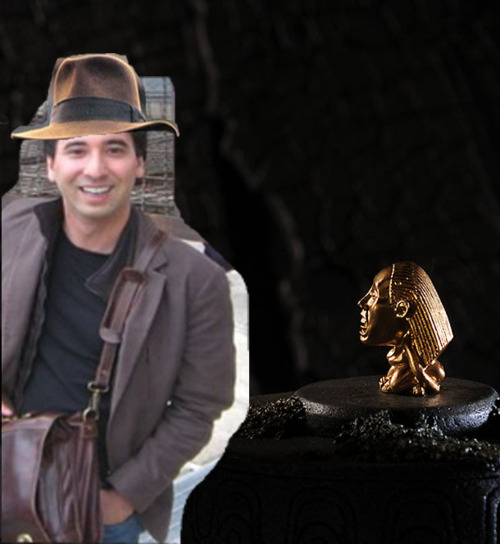
I'm "Sara Does Science"'s "Science Crush Friday" for the week. Includes the wonderful (if fanciful) line "Michael Scott Cuthbert is music’s Indiana Jones" and the description "Not a bad looking guy at all! And he kind of reminds me of Ross from Friends, but the smile makes him seem less neurotic." For the record, I am equally neurotic, just in different ways.
Thanks Sara!
Update 2026-Jan (reprinting the original below since Sara Callori's blog seems to have vanished and the Archive.org link is unstable)
Science Crush Friday!
So I was feeling kind of crappy this morning and my plan orginally was to phone in Science Crush Friday this week with some gratuitous Neil deGrasse Tyson pictures, because I will never get tired of astronomy’s big, chocolate bear.
But then an internet friend of mine posted this article about an MIT professor who uses computational data analysis to study music. And I have to say, computational data analysis is pretty darn scientific.
Now, I was a bit skeptical at first, because I’ve been to some talks recently on the intersection of data and music/art, and they’ve all seemed to focus on people who use data to make something interesting artistically. The end products, however, seem to be divorced from the data in that you don’t learn something about the data from experiences about the art. And when I think of the intersection of data/science and art, I want the art to reflect the science, dammit!
Today’s science crush is MIT professor Michael Scott Cuthbert. He gets this honor because he has made me rethink the relationship between data analysis and music. Also, take a gander at this fellow.

Not a bad looking guy at all! And he kind of reminds me of Ross from Friends, but the smile makes him seem less neurotic.
But what really makes him crush-worthy is how cool his work is. But before I go into this, a disclaimer: For a physicist, I am a pretty bad programmer, and as far as music goes, I’ve just started learning about it, so my understanding of his work is more on the level of “SO COOL!!! It’s part music, part science, and part magic!” rather than “Oh, I appreciate the nuance of this code and how you can apply it to major chords.”
For starters, check out this awesome piece of data analysis. It takes a serial music piece (which, to anyone who likes science and math is a cool thing itself) and it able to map out a relationship between note pitches, duration, and how much they occur in the music. I wouldn’t be able to tell you what this means about the Messiaen piece, but I can appreciate learning about different styles of music by looking at musical data in a visual form. Hell, this is how I learn about current research in my field, through lots of plots!
Analysis like this can be applied to track musical trends not just on a piece-by-piece basis but throughout history! He’s like a musical archaeologist! And he can use his code to help learn things about lost music from hundreds of years ago! Michael Scott Cuthbert is a musical Indiana Jones! (As opposed to Indiana Jones: The musical, which doesn’t exist but would be amazing.)
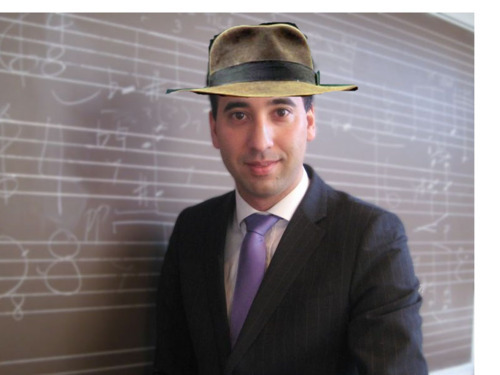
(I’m not too great with Photoshop, either.)
———-
This just in! More proof that Michael Scott Cuthbert is music’s Indiana Jones.